


Overview
The Power to Create
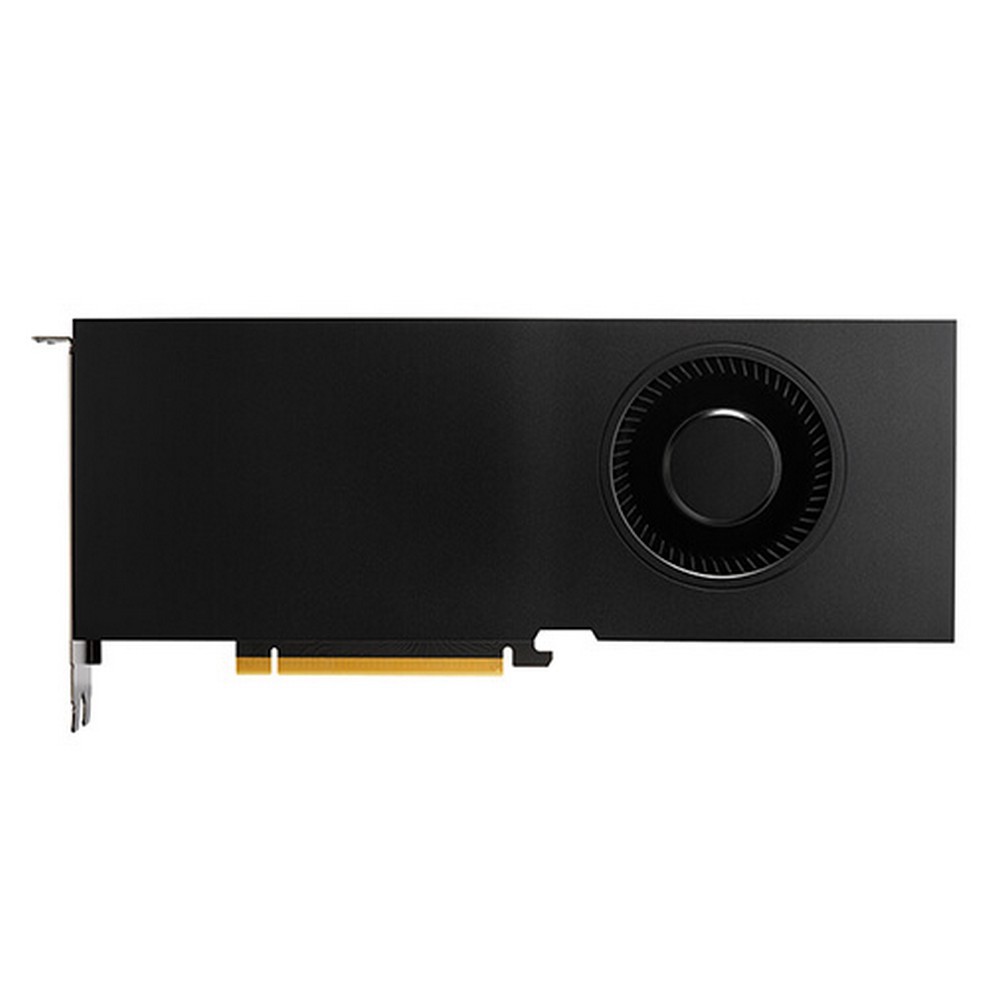
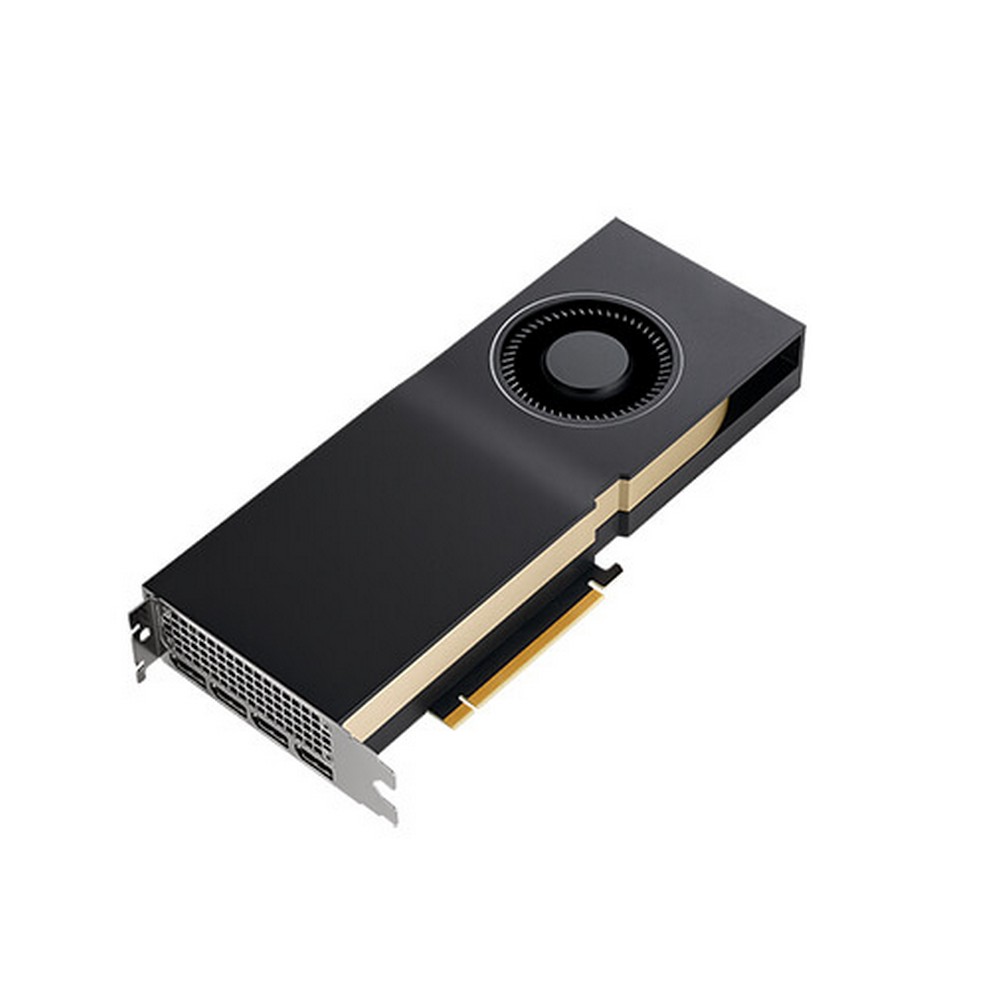
NVIDIA RTX™ A5500 unleashes the power of the NVIDIA Ampere architecture with new levels of performance, capability, and collaboration for professionals, inspiring them to create without boundaries. Based on the NVIDIA Ampere architecture, second generation NVIDIA RTX technology enables artists, designers, engineers, and scientists to bring their imagination to life with enhanced real-time ray tracing, accelerated AI, advanced graphics and compute capabilities, virtualization, and photorealistic VR. With over 70 of the world’s leading professional applications now accelerated by RTX technology, professionals can more quickly design and build immersive digital experiences.
Designed for demanding workloads, the NVIDIA RTX A5500 provides professionals the ability to simultaneously run multiple applications with smooth interactions and no impacts to performance. NVIDIA RTX A5500 delivers the stability, reliability, performance, and features required to build high-quality, immersive content and collaborate from anywhere. With 24 GB of GPU memory, expandable to 48GB with NVLink, the NVIDIA RTX A5500 easily handles large models, datasets, 3D renders, and complex scenes with higher fidelity and interactivity, helping users unlock their imagination and creativity from their desktops.
Performance Features
NVIDIA Ampere ArchitectureNVIDIA RTX A5500 is the most balanced workstation GPU offering high performance real-time ray tracing, AI-accelerated compute, and professional graphics rendering within an optimized power envelope. Building upon the major SM enhancements from the Turing GPU, the NVIDIA Ampere architecture enhances ray tracing operations, tensor matrix operations, and concurrent executions of FP32 and INT32 operations. |
CUDA CoresThe NVIDIA Ampere architecture-based CUDA cores bring up to 3.0X the single-precision floating point (FP32) throughput compared to the previous generation, providing significant performance improvements for graphics workflows such as 3D model development and compute for workloads such as desktop simulation for computer-aided engineering (CAE). The RTX A5500 enables two FP32 primary data paths, doubling the peak FP32 operations. |
2nd Generation RT CoresIncorporating 2nd generation ray tracing engines, NVIDIA Ampere architecture-based GPUs provide incredible ray-traced rendering performance. A single RTX A5500 board can render complex professional models with physically accurate shadows, reflections, and refractions to empower users with instant insight. Working in concert with applications leveraging APIs such as NVIDIA OptiX, Microsoft DXR and Vulkan ray tracing, systems based on the RTX A5500 will power truly interactive design workflows to provide immediate feedback for unprecedented levels of productivity. The RTX A5500 is up to 2X faster in ray tracing compared to the previous generation. This technology also speeds up the rendering of ray-traced motion blur for faster results with greater visual accuracy. |
3rd Generation Tensor CoresPurpose-built for deep learning matrix arithmetic at the heart of neural network training and inferencing functions, the RTX A5500 includes enhanced Tensor Cores that accelerate more datatypes, and includes a new Fine-Grained Structured Sparsity feature that delivers up to 2X throughput for tensor matrix operations compared to the previous generation. New Tensor Cores will accelerate two new TF32 and BFloat16 precision modes. Independent floating-point and integer data paths allow more efficient execution of workloads using a mix of computation and addressing calculations. |
PCIe Gen 4The RTX A5500 supports PCI Express Gen 4, which provides double the bandwidth of PCIe Gen 3, improving data-transfer speeds from CPU memory for data-intensive tasks like AI and data science. |
Higher Speed GDDR6 MemoryBuilt with 24GB GDDR6 memory delivering up to 50% greater bandwidth throughput for ray tracing, rendering, and AI workloads than the previous generation. The RTX A5500 provides the industry’s largest graphics memory footprint to address the largest datasets and models in latency-sensitive professional applications. |
Error Correcting Code (ECC) on Graphics MemoryMeet strict data integrity requirements for mission critical applications with uncompromised computing accuracy and reliability for workstations. |
5th Generation NVDEC Engine1NVDEC is well suited for transcoding and video playback applications for real-time decoding. The following video codecs are supported for hardware-accelerated decoding: MPEG-2, VC-1, H.264 (AVCHD), H.265 (HEVC), VP8, VP9, and AV1. |
7th Generation NVENC EngineNVENC can take on the most demanding 4K or 8K video encoding tasks to free up the graphics engine and the CPU for other operations. The RTX A5500 provides better encoding quality than software-based x264 encoders. |
Graphics PreemptionPixel-level preemption provides more granular control to better support time-sensitive tasks such as VR motion tracking. |
Compute PreemptionPreemption at the instruction-level provides finer grain control over compute tasks to prevent long-running applications from either monopolizing system resources or timing out. |
NVIDIA RTX IOAccelerating GPU-based lossless decompression performance by up to 100x and 20x lower CPU utilization compared to traditional storage APIs using Microsoft’s new DirectStorage for Windows API. RTX IO moves data from the storage to the GPU in a more efficient, compressed form, and improving I/O performance. |
Multi-GPU Technology
3rd Generation NVLink2Connect two RTX A5500 cards with NVLink to double the effective memory footprint and scale application performance by enabling GPU-to-GPU data transfers at rates up to 112.5 GB/s (total bandwidth). |
NVIDIA® SLI® TechnologyLeverage multiple GPUs to dynamically scale graphics performance, enhance image quality, expand display real estate, and assemble a fully virtualized system. |
Display Features
NVIDIA Mosaic Technology
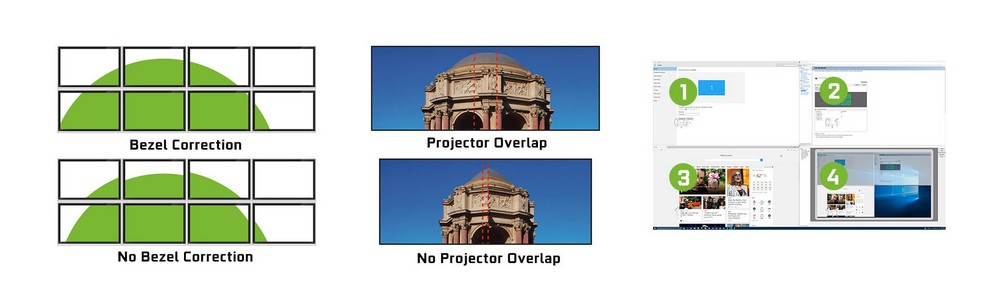
Transparently scale the desktop and applications across up to 4 GPUs and 16 displays from a single workstation while delivering full performance and image quality.
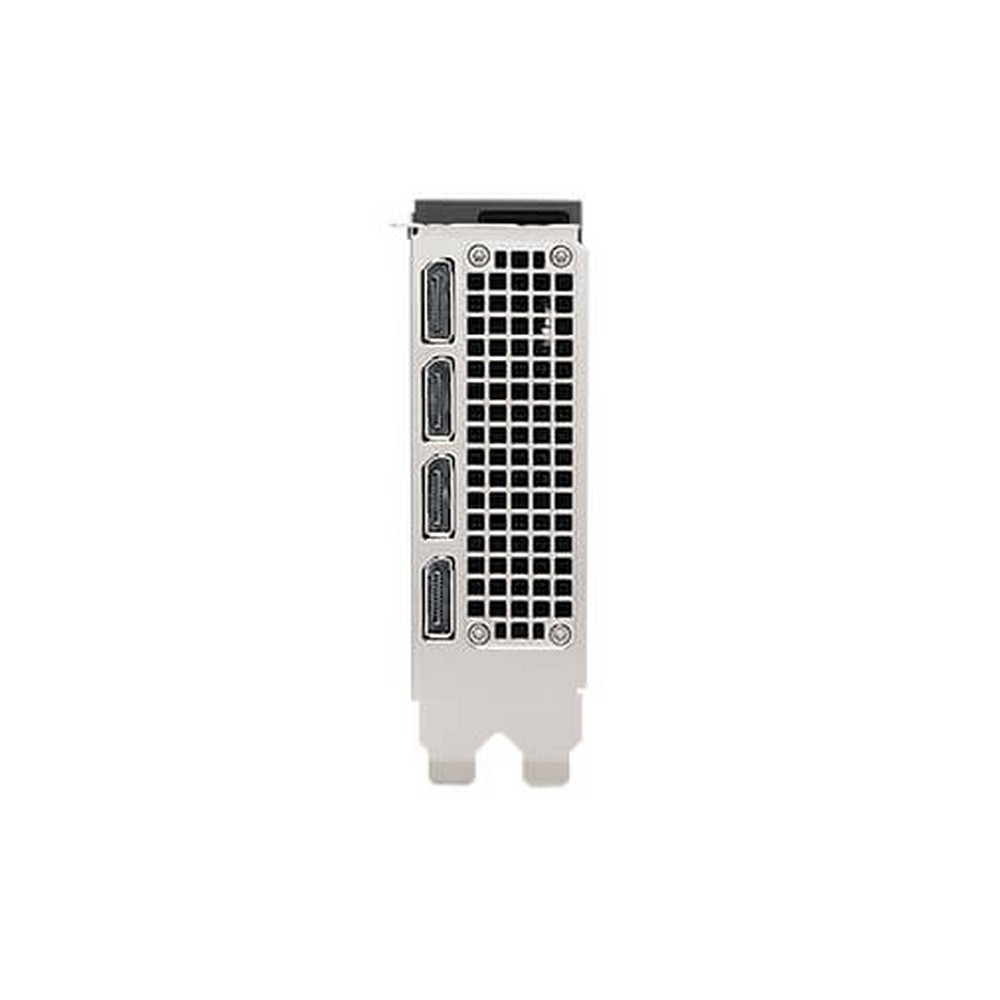
DisplayPort 1.4aSupport up to four 5K monitors @ 60Hz, or dual 8K displays @ 60Hz per card. The RTX A6000 supports HDR color for 4K @ 60Hz for 10/12b HEVC decode and up to 4K @ 60Hz for 10b HEVC encode. Each DisplayPort connector can drive ultra-high resolutions of 4096×2160 @ 120 Hz with 30-bit color. |
NVIDIA RTX™ Desktop ManagerGain unprecedented end-user control of the desktop experience for increased productivity in a single large display or multi-display environments, especially in the current age of large, widescreen displays. |
NVIDIA® Quadro Sync II4Synchronize the display and image output of up to 32 displays[iii] from 8 GPUs (connected through two Sync II boards) in a single system, reducing the number of machines needed to create an advanced video visualization environment. |
Frame Lock Connector LatchEach frame lock connector is designed with a self-locking retention mechanism to secure its connection with the frame lock cable to provide robust connectivity and maximum productivity. |
OpenGL Quad Buffered Stereo SupportProvide a smooth and immersive 3D Stereo experience for professional applications. |
Ultra-High-Resolution Desktop SupportGet more Mosaic topology choices with high resolution displays devices with a 32K Max desktop size. |
Professional 3D Stereo SynchronizationRobust control of stereo effects through a dedicated connection to directly synchronize 3D stereo hardware to an NVIDIA RTX professional graphics card. |
|
Specification
| GPU Architecture | NVIDIA Ampere Architecture |
|---|---|
| CUDA Parallel Processing cores | 10,240 |
| NVIDIA Tensor Cores | 320 |
| NVIDIA RT Cores | 80 |
| Single-Precision Performance | 34.1 TFLOPS |
| RT Core Performance | 66.6 TFLOPS |
| Tensor Performance | 272.8 TFLOPS |
| Frame Buffer M”emory | 24 GB GDDR6 with ECC |
| Memory Interface | 384-bit |
| Memory Bandwidth | 768 GB/s |
| Max Power Consumption | 230 W |
| Graphics Bus | PCI Express 4.0 x 16 |
| Display Connectors | DP 1.4 (4) |
| Form Factor | 4.4″ H x 10.5″ L Dual Slot |
| Product Weight | 1.025 kg |
| Thermal Solution | Active |
| vGPU Software Support | NVIDIA ® Virtual PC/Virtual Applications (vPC/vApps), NVIDIA RTX® Virtual Workstation (vWS), NVIDIA Virtual Compute Server (vCS) |
| vGPU Profiles Supported | See vGPU Pricing & Licensing Guide |
| Power Connector | 1x 8-pin PCle |
| Frame lock | Compatible (with Quadro Sync II) |
| NVLink Interconnect | 112.5 GB/s (bidirectional) |
| NVENC | NVDEC | 1x | 2x (+AV1 decode) |


