


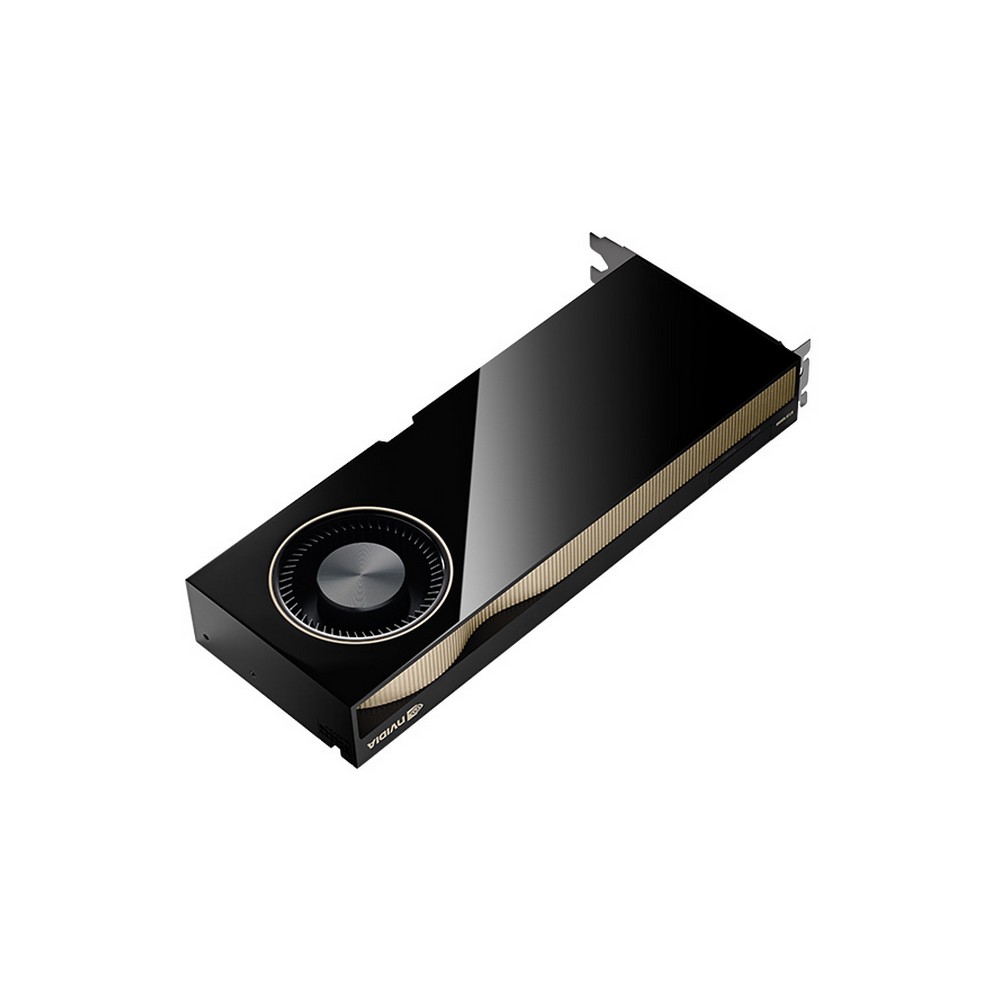
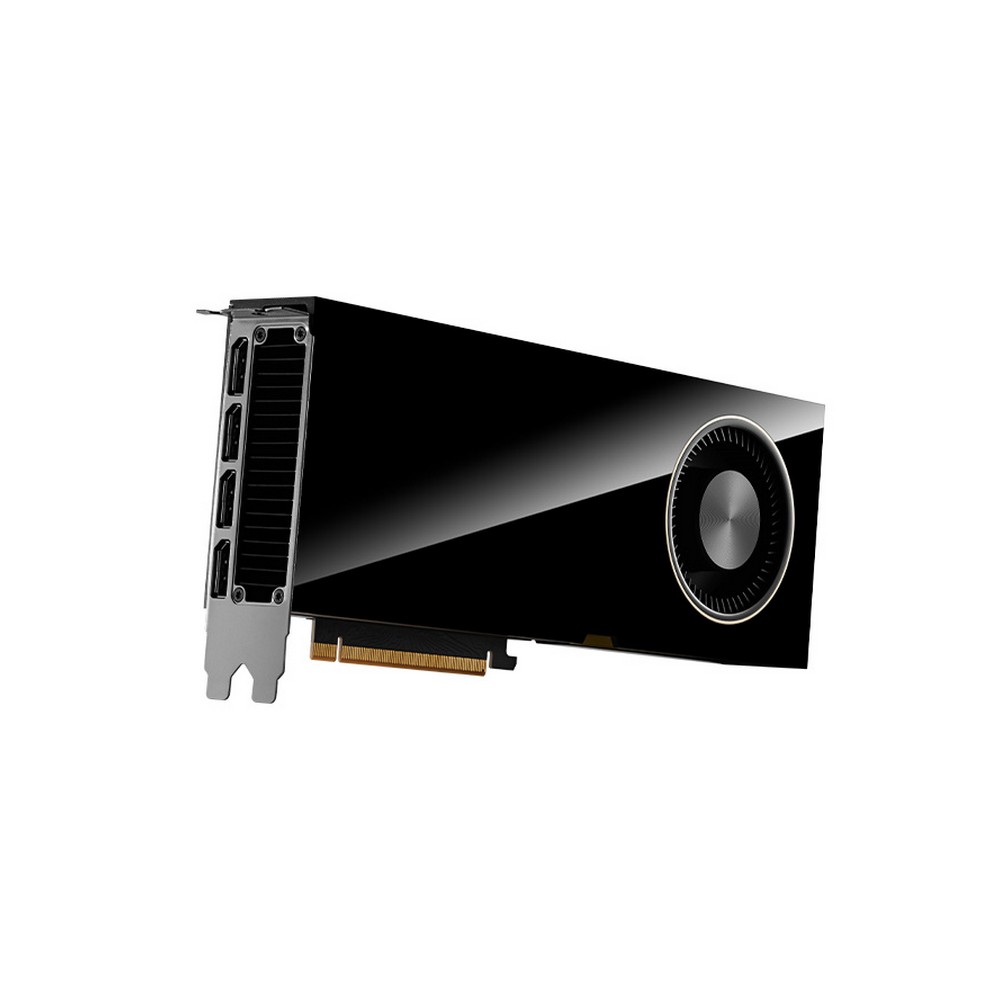
Overview
Performance Features
NVIDIA Ada Lovelace ArchitectureNVIDIA RTX™ 6000 Ada Generation is the most powerful workstation GPU offering high-performance, real-time ray tracing, AI-accelerated compute, and professional graphics rendering. Building upon the major SM enhancements from the Ada Lovelace GPU, the NVIDIA Ada Lovelace architecture provides more cores, higher clocks, and a larger L2 cache for more performance to enhance ray tracing operations, tensor matrix operations, and frame rates with DLSS 3.0. |
NVIDIA CUDA CoresThe NVIDIA Ada Lovelace architecture-based CUDA Cores offer more than 2X the single-precision floating point (FP32) throughput compared to the previous generation, providing significant performance improvements for graphics workflows such as 3D model development and compute for workloads such as desktop simulation for computer-aided engineering (CAE). The RTX 6000 enables two FP32 primary data paths, doubling the peak FP32 operations. |
Third-Generation RT CoresIncorporating 3rd generation ray tracing engines, NVIDIA Ada Lovelace architecture-based GPUs provide incredible ray-traced rendering performance. A single RTX 6000 board can render complex professional models with physically accurate shadows, reflections, and refractions to empower users with instant insight. Working in concert with applications leveraging APIs such as NVIDIA OptiX, Microsoft DXR, and Vulkan ray tracing, systems based on the RTX 6000 will power truly interactive design workflows to provide immediate feedback for unprecedented levels of productivity. The RTX 6000 features up to 2X faster ray-triangle intersection throughput compared to the previous generation. |
Fourth-Generation Tensor CoresSpecialized for deep learning matrix multiply and accumulate math operations at the heart of neural network training and inferencing functions, the RTX 6000 includes enhanced Tensor Cores that accelerate more data types and still support the Fine-Grained Structured Sparsity feature that delivers more than 2X throughput for tensor matrix operations compared to the previous generation. New Tensor Cores will accelerate new FP8 precision modes. Independent floating-point and integer data paths allow more efficient execution of workloads using a mix of computation and addressing calculations. |
Higher Speed GDDR6 MemoryBuilt with 48GB GDDR6 memory delivering up to 25% greater throughput for ray tracing, rendering, and AI workloads than the previous generation. The RTX 6000 provides the industry’s largest graphics memory footprint to address the largest datasets and models in latency-sensitive professional applications. |
PCIe Gen 4The RTX 6000 supports PCI Express Gen 4, which provides double the bandwidth of PCIe Gen 3, improving data-transfer speeds from CPU memory for data-intensive tasks like AI and data science. |
Error Correcting Code (ECC) on Graphics MemoryMeet strict data integrity requirements for mission-critical applications with uncompromised computing accuracy and reliability for workstations. |
5th Generation NVDEC EngineNVDEC is well suited for transcoding and video playback applications for real-time decoding. The following video codecs are supported for hardware-accelerated decoding: MPEG-2, VC-1, H.264 (AVCHD), H.265 (HEVC), VP8, VP9, and AV1 video formats. Video encoding at 8K/60 will be achievable for professional video editing. |
8th Generation NVENC EngineNVENC can take on the most demanding 4K or 8K video encoding tasks to free up the graphics engine and the CPU for other operations. The RTX 6000 provides better encoding quality than software-based x264 encoders. The RTX 6000 incorporates AV1 video encoding which is 40% more efficient than H.264 encoding for 4K HDR video. AV1 will provide better quality at the same bitrate bandwidth. |
Graphics PreemptionPixel-level preemption provides more granular control to better support time-sensitive tasks such as VR motion tracking. |
Compute PreemptionPreemption at the instruction level provides finer-grain control over compute tasks to prevent long-running applications from either monopolizing system resources or timing out. |
|
Performance

Performance testing with RTX 6000 Ada Generation and RTX A6000 GPUs and Intel Core i9-12900K. Performance subject to change.
Display Features
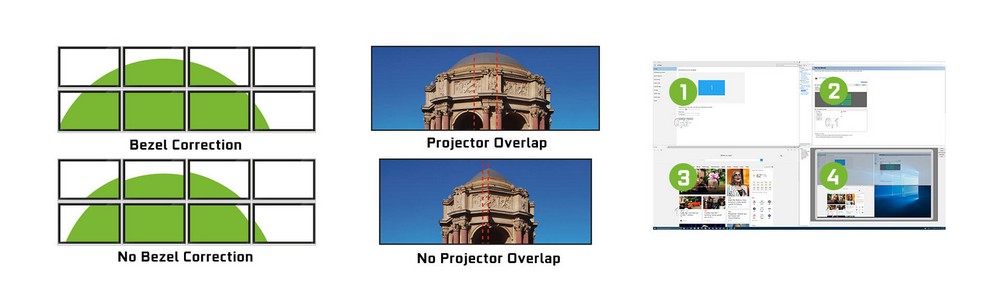
NVIDIA Mosaic Technology
Transparently scale the desktop and applications across up to 4 GPUs and 16 displays from a single workstation while delivering full performance and image quality.
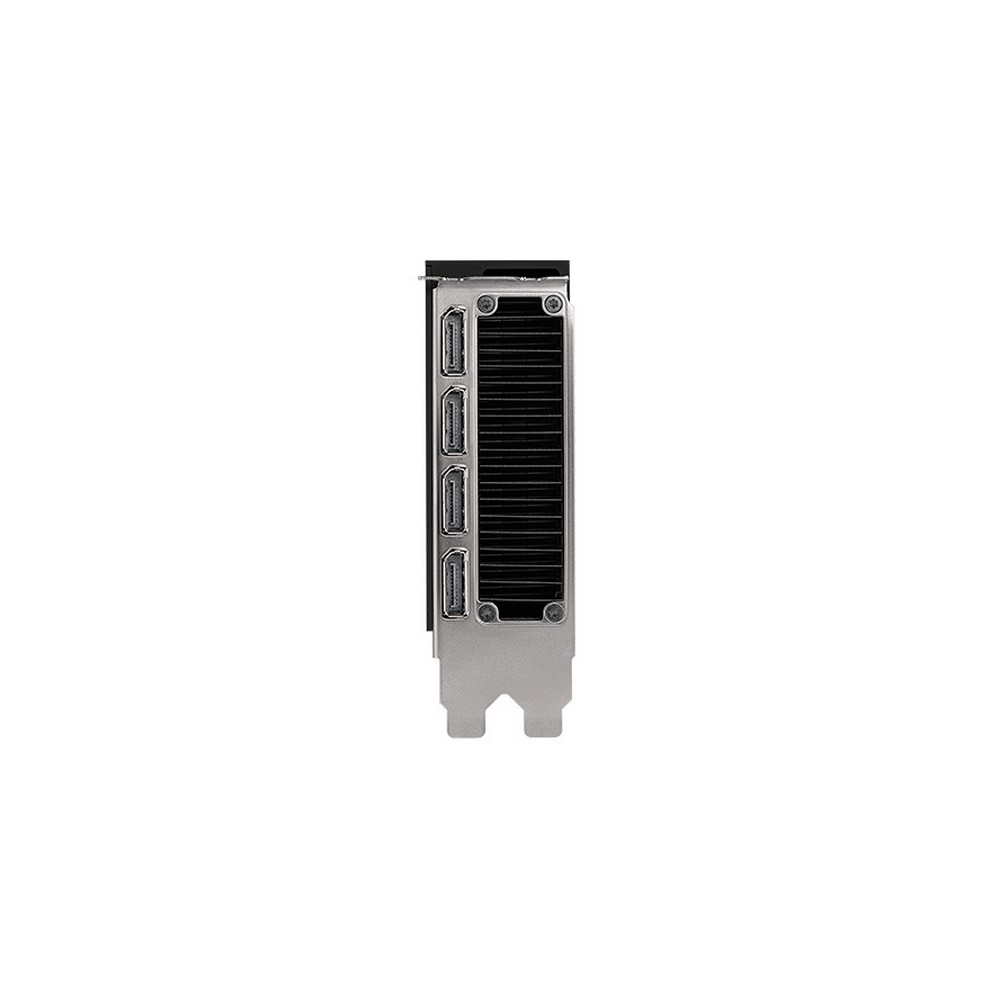
DisplayPort 1.4aSupport up to four 5K monitors @ 60Hz, or dual 8K displays @ 60Hz per card. The RTX 6000 supports HDR color for 4K @ 60Hz for 10/12b HEVC decode and up to 4K @ 60Hz for 10b HEVC encode. Each DisplayPort connector can drive ultra-high resolutions of 4096×2160 @ 120 Hz with 30-bit color. |
NVIDIA RTX™ Desktop ManagerGain unprecedented end-user control of the desktop experience for increased productivity in a single large display or multi-display environments, especially in the current age of large, widescreen displays. |
NVIDIA Quadro Sync IISynchronize the display and image output of up to 32 displays2 from 8 GPUs (connected through two Sync II boards) in a single system, reducing the number of machines needed to create an advanced video visualization environment. |
Frame Lock Connector LatchEach frame lock connector is designed with a self-locking retention mechanism to secure its connection with the frame lock cable to provide robust connectivity and maximum productivity. |
OpenGL Quad Buffered Stereo SupportProvide a smooth and immersive 3D Stereo experience for professional applications. |
Ultra-High-Resolution Desktop SupportGet more Mosaic topology choices with high resolution displays devices with a 32K Max desktop size. |
Professional 3D Stereo SynchronizationRobust control of stereo effects through a dedicated connection to directly synchronize 3D stereo hardware to an NVIDIA RTX professional graphics card. |
|
Specification
| GPU Architecture | NVIDIA Ada Lovelace Architecture |
|---|---|
| CUDA Cores | 18,176 |
| Tensor Cores | 568 |
| RT Cores | 142 |
| Single-Precision Performance1 | 91.1 TFLOPS |
| RT Core Performance1 | 210.6 TFLOPS |
| Tensor Performance1 | 1457.0 TFLOPS2 |
| GPU Memory | 48 GB GDDR6 with ECC |
| Memory Interface | 384-bit |
| Memory Bandwidth | 960 GB/s |
| Max Power Consumption | 300W |
| Thermal Solution | Blower Active Fan |
| Graphics Bus | PCI 4.0 x16 |
| Display Connectors | DP 1.4 (4)3 |
| Form Factor | 4.4” H x 10.5” L Dual Slot |
| Product Weight | 1.180 kg |
| vGPU Software Support3 | NVIDIA vPC/vApps, NVIDIA RTX Virtual Workstation (vWS) |
| vGPU Profiles Supported | 1 GB, 2 GB, 3 GB, 4 GB, 6 GB, 8 GB, 12 GB, 16 GB, 24 GB, 48 GB |
| NVLink Interconnect | Not Supported |
| Frame Lock | Compatible (with Quadro Sync II) |
| NVENC | NVDEC | 3x | 3x (+AV1 encode & decode) |


